

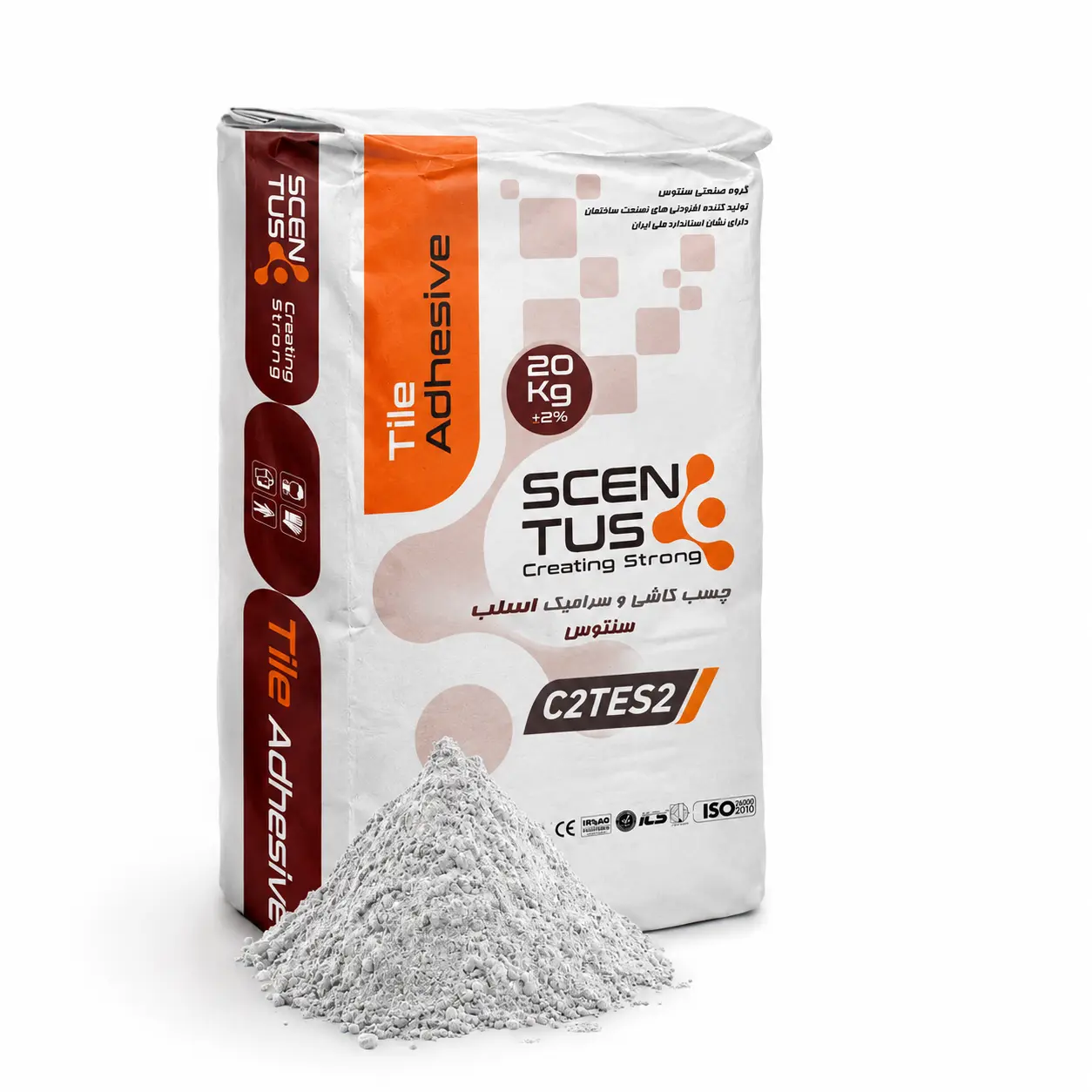
Description
Scentus ST6 Fibre-Reinforced Slab Adhesive | C2TES2
Scentus ST6 is a fibre-reinforced, polymer-modified cementitious adhesive for large-format porcelain slabs. Its declared C2TES2 class combines improved adhesion, reduced slip, extended open time and S2 deformability. Full slab contact, movement joints and correct installation are essential.
Product overview
Scentus ST6 is a fibre-reinforced, polymer-modified cementitious adhesive for large-format porcelain slabs. Its declared C2TES2 class combines improved adhesion, reduced slip, extended open time and S2 deformability. Full slab contact, movement joints and correct installation are essential.
Applications and compatible substrates
Large-format porcelain slab installation on properly engineered, stable substrates where the selected adhesive grade is appropriate. Natural stone, facades and special substrates need independent compatibility and engineering assessment.
Classification and quality control
Classification requirements in EN 12004-1 and ISO 13007-1 are reference thresholds, not a substitute for testing the particular production batch.
Fibre reinforcement and polymer modification
Reinforcing fibres are part of the powder formulation and work with the polymer modification to support application. Overall performance depends on the complete compatible system.
Technical specifications
| Product code | ST6 |
|---|---|
| Technical class | C2TES2 |
| Product type | Fibre-reinforced cementitious powder |
| Packaging | 20 kg |
| Estimated consumption | 5–8 kg/m² |
| Reference standard | EN 12004-1:2017 |
| Initial tensile adhesion | ≥ 1.0 MPa (class requirement) |
| Slip (T) | ≤ 0.5 mm (class requirement) |
| Extended open time (E) | ≥ 30 min (class requirement) |
| Transverse deformation | S2: ≥ 5 mm |
Classification values are standard thresholds, not certified laboratory results for this production batch.
Features and benefits
Polymer-modified, fibre-reinforced adhesive for large-format slabs; classification includes reduced slip, extended open time and deformability appropriate to its designated grade.
Choosing the correct tile adhesive
Choose the adhesive according to tile absorption, size, weight, substrate movement, humidity, service conditions and project design. Standard class values are classification criteria, not measured production-batch results. Specialist applications may require additional testing or mechanical fixing.
Surface preparation
Remove dust, laitance, grease, weak coatings and loose materials. Check substrate soundness, flatness, absorbency and moisture condition; repair cracks and unstable areas. Follow the specified primer and waterproofing system where required.
Mixing and application
Prepare the substrate and select the appropriate notched trowel. For powder products, measure clean water according to the product instructions, add powder gradually and mix thoroughly. Apply adhesive within its workable period, press tiles into the fresh bed, check contact and respect movement joints and curing times. Never retemper setting mortar with water.
Consumption and coverage
For preliminary estimates, allow approximately 5–8 kg/m². A 20 kg bag covers approximately 2.5–4 m² at that rate. Actual use depends on tile size, notched trowel, substrate flatness, back-buttering and waste. Required bags = area × measured consumption ÷ 20, rounded up.
Movement joints and back-buttering
Use appropriate back-buttering on large slabs as required; verify effective adhesive contact at both the substrate and the back of the slab, maintain planned movement joints and assess any need for mechanical fixing.
Restrictions and important notes
Choose the adhesive according to tile absorption, size, weight, substrate movement, humidity, service conditions and project design. Standard class values are classification criteria, not measured production-batch results. Specialist applications may require additional testing or mechanical fixing.
Packaging and storage
Supplied in 20 kg bags. Store unopened bags on pallets in dry conditions, protected from rain and ground moisture. Observe the instructions and expiry printed on the packaging.
Health, safety and quality control
Wear suitable protective equipment, prevent dust or paste contact with eyes, follow the product safety instructions and clean tools appropriately. Check installation quality, adhesive transfer, joints and curing before handover.
Frequently asked questions
Which product should I select? Choose the grade according to the tile and project requirements. How many bags do I need? Multiply the measured area by actual consumption and divide by the pack weight, allowing for waste. Is this product waterproofing? Tile adhesive does not replace a dedicated waterproofing layer.
Catalog and technical information
Download the latest Scentus product catalog and consult the specific technical instructions before application.