

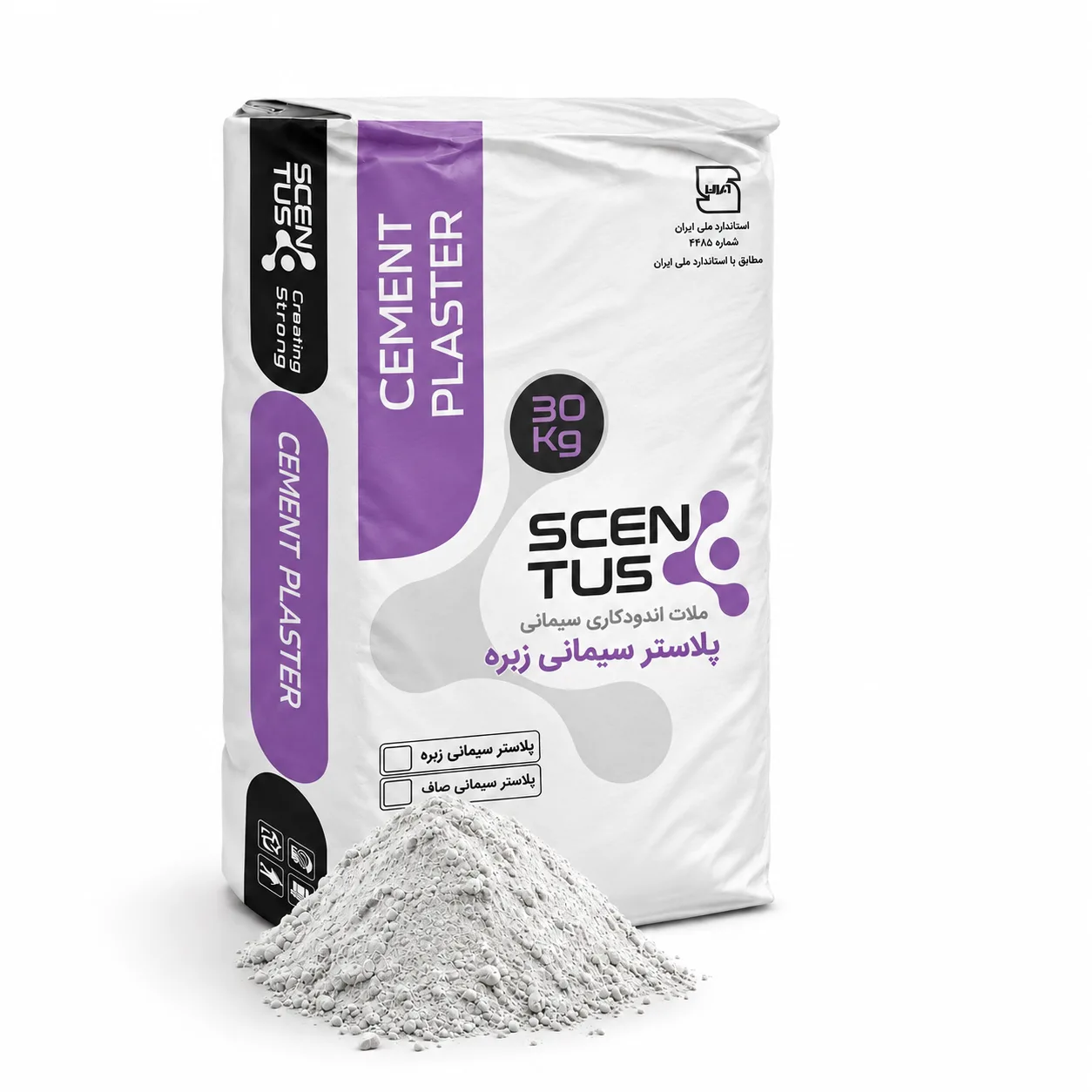
Description
Scentus Polymer-Modified Cement Coarse Coat Plaster
Scentus polymer-modified cement coarse coat plaster is a ready-mixed dry render for an intermediate coat or a coarse finish on prepared building surfaces. It is applied between the base coat and the final finish to help achieve a uniform texture.
Technical Information – Scentus Coarse Coat Plaster
Product Overview
Scentus polymer-modified cement coarse coat plaster is a ready-mixed dry render for an intermediate coat or a coarse finish on prepared building surfaces. It is applied between the base coat and the final finish to help achieve a uniform texture.
This product belongs to the Scentus polymer-modified cement plaster range. Select the appropriate grade according to the layer’s role in the plaster system and the condition of the substrate.
Applications
- Applying an intermediate coat over a prepared and compatible base coat
- Creating a uniform coarse texture before the final finish
- Preparing interior and exterior walls for subsequent plastering
Technical Specifications
| Product name | Scentus Polymer-Modified Cement Coarse Coat Plaster |
|---|---|
| Product type | Ready-to-use cement-based dry mortar modified with polymers |
| Primary application | Intermediate coat and coarse finish |
| Application area | Interior and exterior surfaces with suitable substrate preparation |
| Maximum grain size | 0.7 mm |
| Maximum thickness per layer | Maximum 7 mm |
| Mixing water – plaster range | Approximately 25–30% of powder weight; follow the instructions for this specific grade |
| Working life – range guidance | Approximately 2–3 hours, depending on ambient conditions |
| Substrate temperature – range guidance | +4 to +32 °C |
| Packaging | 30 kg bag |
| Available colors in the range | White and gray; custom colors by arrangement |
Features and Benefits
- Creating an intermediate coat with controlled texture
- Preparing surfaces for the final finishing stages
- Suitable spreading and finishing on a prepared substrate
- Compatible with multilayer cement plaster systems
Substrate Preparation
- Remove dust, oil, loose particles and unstable coatings from the surface.
- Repair cracks, cavities and loose areas before plastering.
- Check substrate absorption and, if needed, select a primer compatible with the system.
- Do not apply to frozen, contaminated or unsound substrates.
Mixing Ratio and Mortar Preparation
- Prepare a clean container, clean tools and suitable water.
- Gradually add the powder to the water and mix with an appropriate mixer until uniform.
- For base, coarse and fine grades, the range guidance gives approximately 25–30% water by powder weight; the directions on the packaging for the actual grade take precedence.
- Use the mortar within its working life; do not add water again once setting has begun.
Step-by-Step Application
- Clean and prepare the substrate according to its type.
- Mix the mortar with clean water at the specified product ratio.
- Spread the mortar on the surface using a trowel or suitable tool to the recommended thickness.
- Prepare an even coarse-textured surface for the following finish coat.
- After application, protect against rapid drying and unsuitable environmental conditions.
Consumption and Bag Quantity Estimate
For preliminary estimates under normal conditions, the cement plaster range consumes approximately 1.5–2.3 kg/m² per mm thickness . Actual consumption varies with substrate porosity and unevenness, applied thickness and site waste.
Number of bags = estimated mortar weight ÷ 30; round the final number up.
Packaging
Dry powder packaging for mixing with water and use on construction projects.
Application and Storage Notes
- Before applying to the full area, carry out a trial patch and check the result.
- Do not apply a layer thicker than the recommended limit for the selected grade.
- Store bags in a dry, sheltered location, away from moisture and direct contact with the ground.
- Wear gloves, a suitable dust mask and eye protection during preparation and mixing.
- This plaster alone is not a substitute for a waterproofing or damp-proofing system.
Frequently Asked Questions
Coarse plaster, with a maximum grain size of 0.7 mm, is for intermediate layers and coarser finishes; fine plaster has smaller grains for a smoother final surface.
Maximum 7 mm according to the product instructions.
Application may be considered within a suitable system after proper substrate preparation, absorption control and compatibility verification.
Catalog and Further Information
Guidance on the Scentus plaster range and details of product applications are available in the catalog.